Few debates in coffee run as hot as automation. For many professionals, handing brewing to a machine feels like a challenge to the craft that defines great espresso. But the sharper question is not whether to automate. It's where automation earns its place – and where a trained barista still makes the difference. SEB Professional Beverage answers by matching the machine to the craft – and identifying the right approach for each task.
Automation is no longer optional
The economics are hard to ignore. Labor costs can account for up to 35% of operating expenses, hospitality staff turnover averages 65%, and for independent operators, staffing is the single biggest challenge. Additionally, the menu has quietly transformed. Iced coffee, plant-based options, matcha, and made-to-order signature drinks are standard now – and making them consistently, at speed, across a mixed-skill team is where manual preparation reaches its limits.
For SEB Professional Beverage, automation is what allows operators to maintain process stability and beverage quality regardless of fluctuations in staff expertise or availability.
Automation is not intended to replace the artistry or passion that defines great coffee, but rather to support and elevate it.
The setting shapes the machine mix
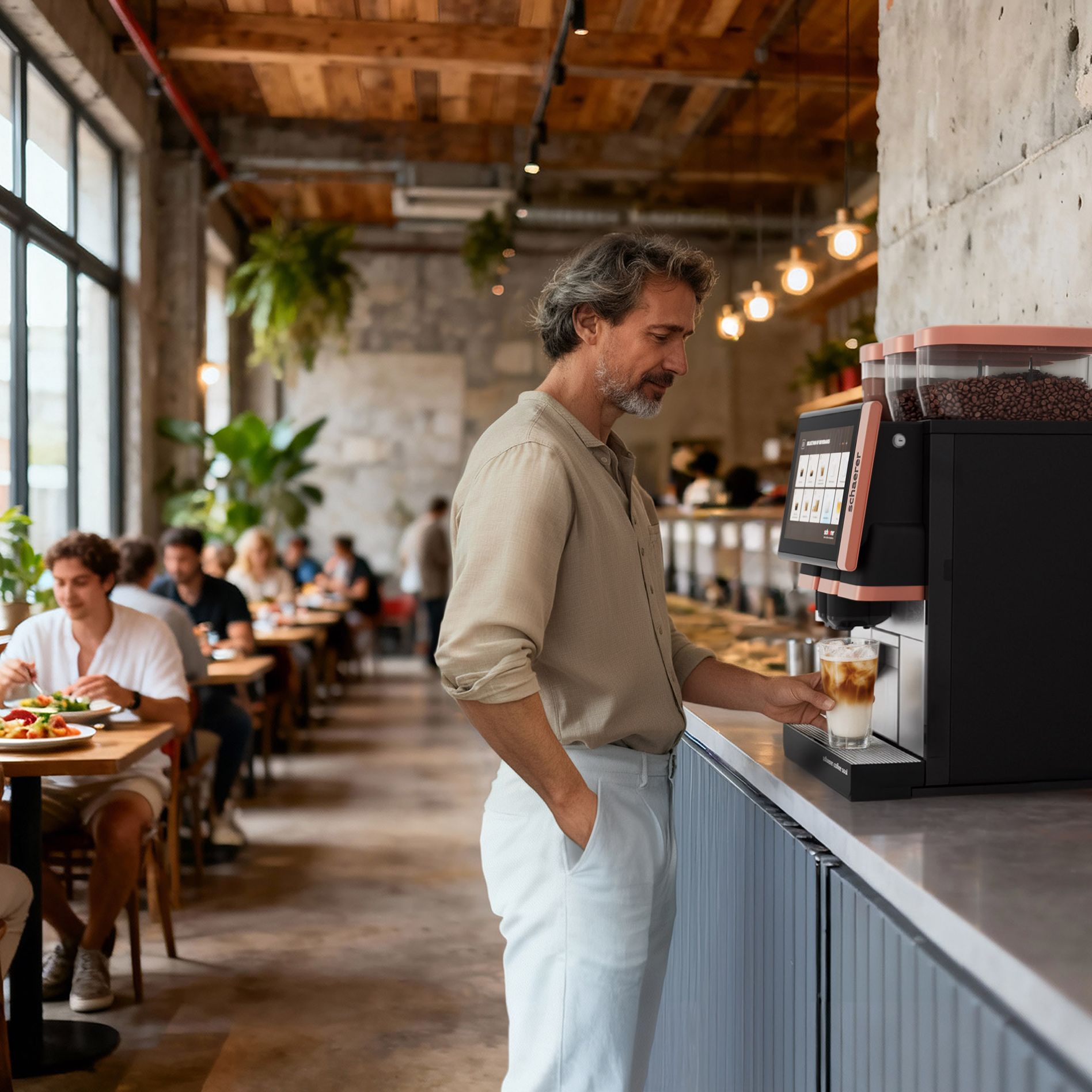
Where automation fits depends on the environment in which it is used. A hotel breakfast, a specialty espresso bar, and a hospital café all have different needs. In some cases, automation vanishes into the background, quietly optimizing grinding, tamping, and milk dosing. In others, it is the concept itself, as with unmanned and robotic café formats most prevalent in Asia and the United States. Most businesses, however, sit in between, using a manual machine for showpiece drinks and an automatic one for the morning rush.
SEB Professional Beverage is built for this variety. Its diverse portfolio, which includes WMF, Schaerer, Curtis, La San Marco, and Zummo, covers the entire spectrum from fully automatic to entirely manual coffee preparation. This enables operators to select equipment that matches their identity.
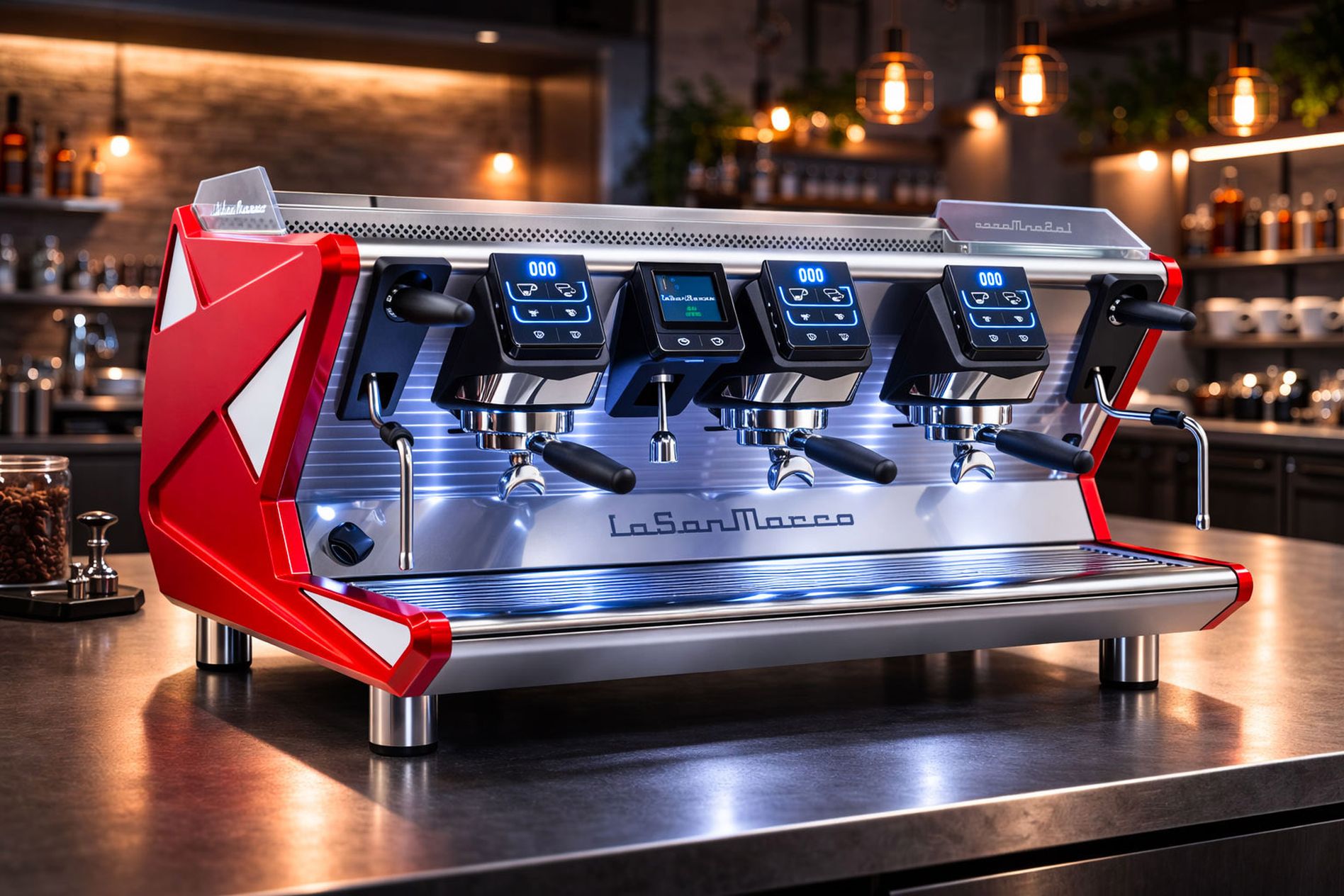
La San Marco LA 125
Craft in the hands of the barista
In a specialty bar, espresso is what brings the regulars back. This is La San Marco's home turf. Founded in 1920, the Italian brand helped to define espresso machines in the first place. When it joined Groupe SEB in 2023, it brought over a century of expertise into a global ecosystem, extending the brand’s reach without changing its character.
Its flagship model, the LA 125, puts that heritage to work: Individually controlled brew groups feature electronic temperature regulation accurate to ±0.1°C, giving skilled baristas full command over extraction. Meanwhile, insulated boilers ensure that every espresso tastes as good as the first. In a class where multi-boiler machines usually come with a premium price tag, the LA 125 stands out as the most affordable of its kind.
WMF espresso NEXT
Consistency on every shift
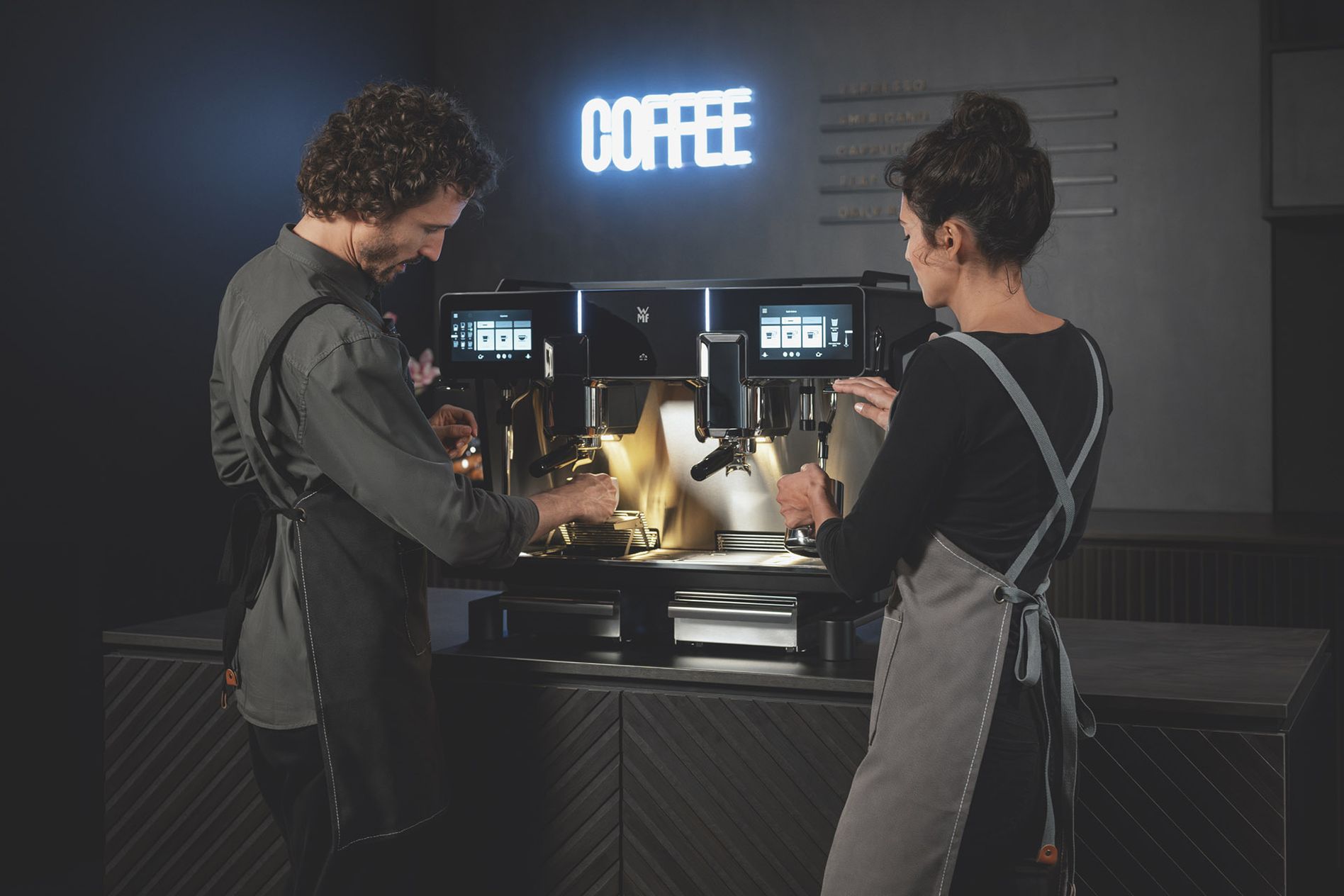
Not every business can employ a team of expert baristas. This is where the semi-automatic WMF espresso NEXT comes in. While it looks and handles like a classic portafilter, the steps that determine consistent quality – grinding, dosing, tamping, and extraction – run automatically and out of sight.
The result is an espresso that tastes the same at opening and at closing, on minimal training, because the machine tracks its own extraction in real time and holds every shot to a predefined standard. For businesses with multiple sites, the benefits are even greater: recipes can be transferred between locations, reliance on hard-to-hire specialists is reduced, and consistent output is maintained even during the busiest periods.
Combining craftsmanship and automation is a deliberate choice
Craftsmanship and automation are two sides of the same coffee culture – and increasingly they share one floor. A hotel can maintain a traditional portafilter bar in its lobby for a more personalized offering, while running fully automatic WMF machines at the breakfast buffet. That makes selecting the right equipment a strategic decision, not just a procurement exercise.
)
Coffee's next chapter is not about tradition or technology. It belongs to operators who are fluent in both – those who know when to let the machine take over, and when to hand the cup back to the barista.